

The reality
Agriculture is the most dangerous industry in Australia.
Not one of the most dangerous — the most. And horticulture's seasonal, high-turnover workforce sits right in the middle of it.
Figures are for Australian agriculture as a whole — the industry horticulture belongs to. See sources below.
The horticulture problem
Spreadsheets and audits don't prevent incidents.
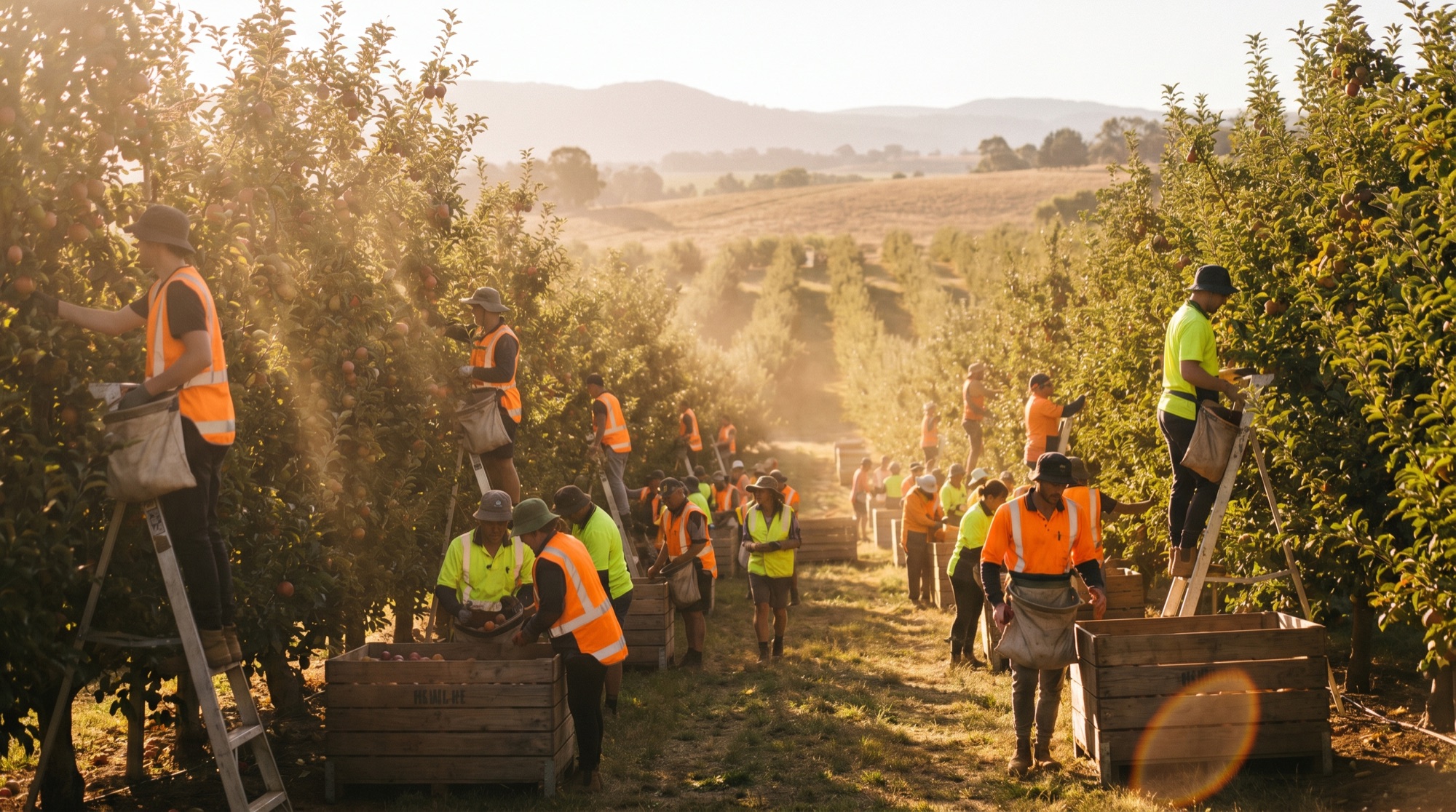
Enterprise horticulture means hundreds of workers, heavy reliance on labour hire and contractors, and safety visibility that's uneven at best. In peak season, inductions get rushed, crews change weekly, and people work alone across blocks — often in extreme heat. A clipboard can't tell you someone has gone down in row 40.
What the data says about your blocks.
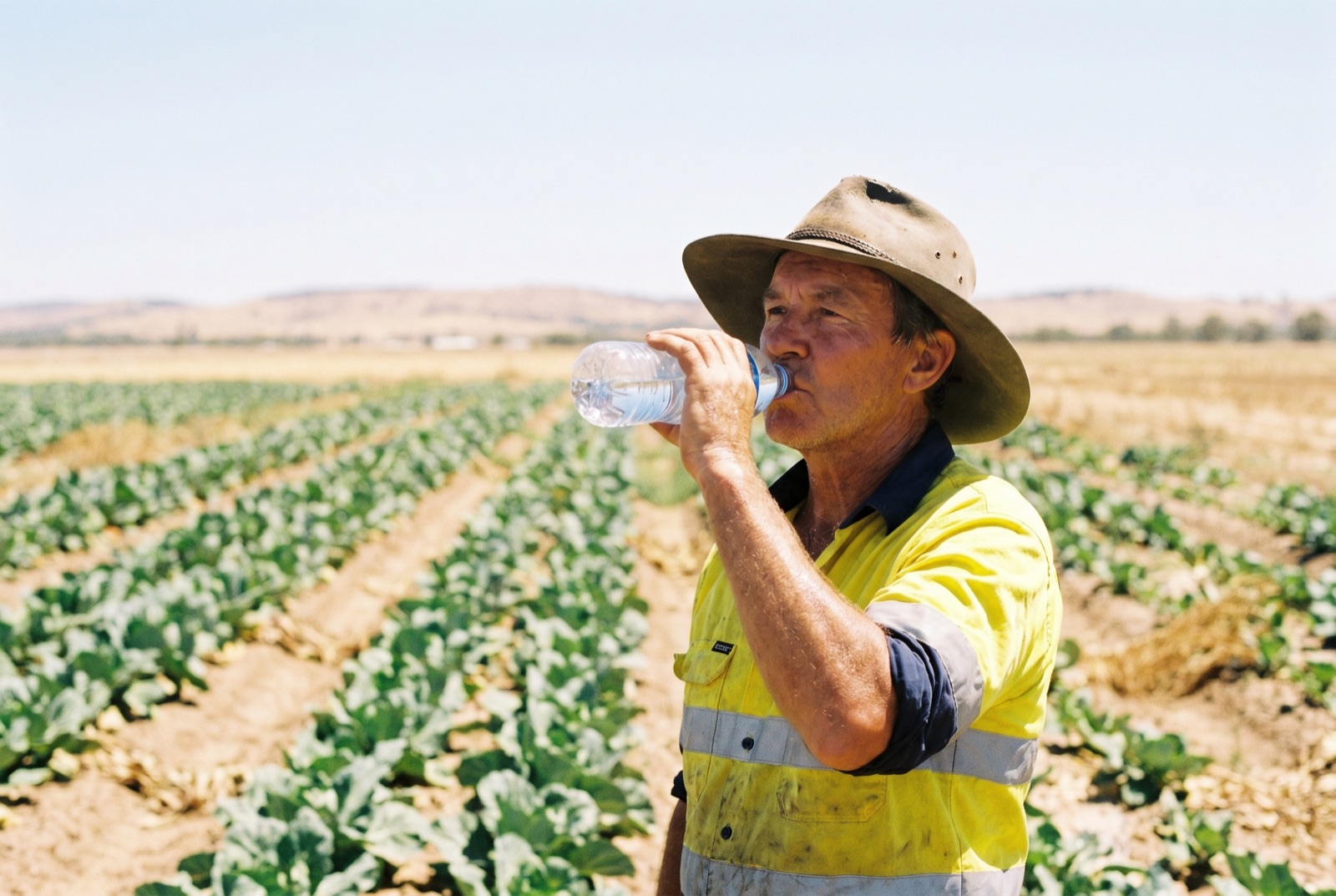
- ✓ Heat & UV. Worker productivity falls 2–3% for every degree above 20°C, and seasonal or overseas workers often aren't acclimatised to Australian heat and UV — raising the risk of heat stress, heat stroke and skin damage.3
- ✓ No fixed "stop-work" temperature. WHS law doesn't set one — the legal duty is on the business to assess and manage heat risk itself.4
- ✓ The big five hazards. Vehicles & machinery, manual handling, chemicals, heat/UV, and slips, trips & falls.4
- ✓ A workforce that changes weekly. High turnover, language barriers and short inductions make consistent safety visibility the hardest part of the job.
AirAgri for horticulture
Real-time safety intelligence for every worker.
One platform that turns an incident into a response — automatically — and gives your board the data to prove it.
Real-time worker tracking
See where every worker is across blocks and sheds — even out of phone range, direct-to-satellite.
Man-down & duress alarms
A fall, no-movement or duress alerts the closest people for immediate response. No button to remember.
Heat & isolation awareness
Flag heat conditions and lone or at-risk workers before exposure becomes an incident.
Fast inductions & training
Get seasonal and labour-hire crews competent and recorded quickly, with SOPs that are easy to follow.
Hazard & incident reporting
Capture near-misses and hazards from the block, with a full, time-stamped audit trail.
ESG & board-ready data
Property- and role-based risk profiling, and defensible human-risk data for governance and ESG reporting.
The commercial upside
Safety that protects your people and your balance sheet.
The same system that brings workers home also lowers the cost of running an enterprise.
Fewer serious incidents
Faster response and earlier intervention reduce the events that hurt people and stop work.
Lower insurance & downtime risk
Fewer claims, less lost time, and a clear safety record at renewal.
Stronger governance narrative
Demonstrable duty of care across every site, role and contractor.
Audit-ready human-risk data
One source of truth for ESG, board and regulator reporting.
Designed for
Built for the way horticulture works.
Australian horticulture is a roughly $18 billion industry and one of the country's largest seasonal employers.5 AirAgri is built for its crops and its crews.
Bringing farmers home
See AirAgri across your horticulture operation.
Book a 30-minute walkthrough, or call us — we'll show you how it works for a workforce like yours.
Thanks — we'll be in touch within two business days. Need us sooner? Call 1800 404 694.
Sources
- Safe Work Australia, Key Work Health and Safety Statistics 2024 — agriculture, forestry & fishing recorded the highest worker fatality rate of any industry (13.7 per 100,000 workers). safeworkaustralia.gov.au
- AgHealth Australia (University of Sydney) and Farmsafe Australia, Safer Farms Report 2025 — 72 people were killed on Australian farms in 2024, the highest toll in more than two decades — roughly one death every five days — and more than double 2023 (five-year average 53); side-by-side vehicles (14 deaths, up from 4 in 2023) overtook quad bikes (10) and tractors (8) as the leading cause for the first time, and children under 15 were involved in 11% of fatal incidents. AgHealth's preliminary 2025 data records 171 serious on-farm injuries — already more than the 133 recorded in all of 2024. farmsafe.org.au · aghealth.sydney.edu.au
- CSIRO, Too hot to harvest: rising heat threatens farm labour and food security (2025) — worker productivity drops 2–3% for every degree above 20°C; unacclimatised seasonal workers face higher heat-stress and UV risk. csiro.au
- Fair Work Ombudsman — Horticulture Showcase: Workplace health & safety (WHS law sets no fixed stop-work temperature; key horticulture hazards). horticulture.fairwork.gov.au
- ABARES, Agricultural commodities and trade data — gross value of Australian horticulture production estimated at around A$18 billion in 2024–25. agriculture.gov.au/abares