
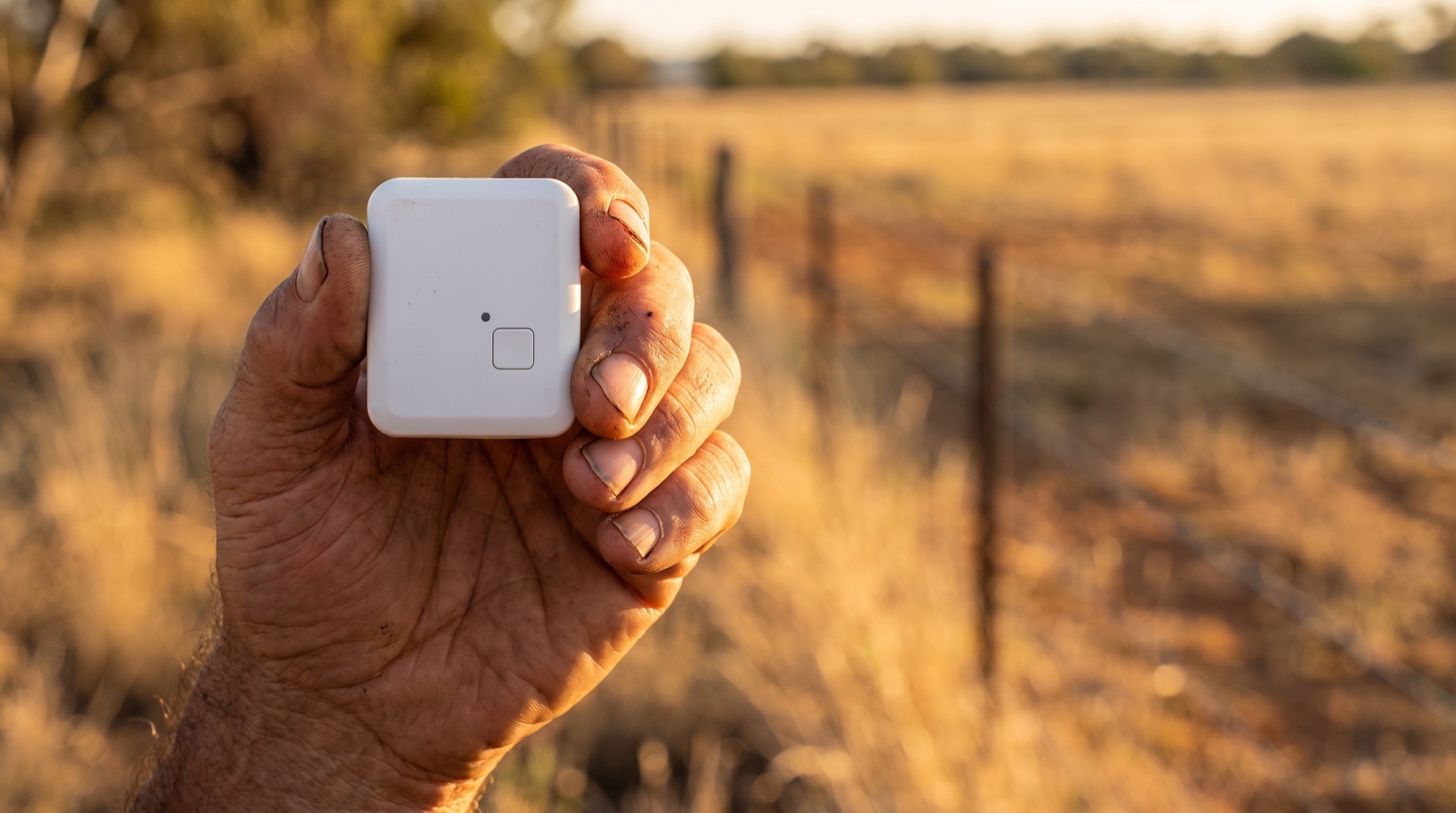
Emergency beacons, or EPIRBs (Emergency Position Indicating Radio Beacons), have long been the lifeline for adventurers in Australia's most remote locations. Designed for hikers, sailors, climbers, and off-grid travellers, these devices offer SOS functionality and, more recently, check-in options via satellite. So it's no surprise that many farmers and agricultural workers have started adopting adventure EPIRBs as a simple solution for lone worker safety.
But here's the catch—adventure EPIRBs were not designed for farms.
And while they provide a basic level of emergency coverage, relying on them for daily farm safety and lone worker protection could expose your operation to hidden risks and dangerous delays.
In this post, we unpack the real limitations of adventure EPIRBs in farming and why a purpose-built agricultural safety system like AirAgri is essential to protect your people, your property, and your legacy.
What Is an Adventure EPIRB?
An Adventure EPIRB or Personal Locator Beacon (PLB) is a compact satellite-connected device with:
- An SOS button that triggers an emergency alert via satellite,
- Check-in functionality, allowing users to send a location update to a nominated contact or app,
- Typically 1 or 2 pre-set emergency contacts configured during setup.
When an SOS is activated in Australia, the alert is routed through AMSAR (Australian Maritime Safety Authority). AMSAR attempts to contact the listed emergency contacts first. If there's no response, emergency services are automatically dispatched based on the last known location.
Sounds good on paper. But farms aren't bushwalks—and farming is far from a single-location activity.
The Hidden Risks on the Farm
1. No Context of Active Areas or Hazards
Adventure EPIRBs don't know where on your property is dangerous, and they can't tell whether a worker is near a known risk zone like:
- A dam,
- A chemical storage shed,
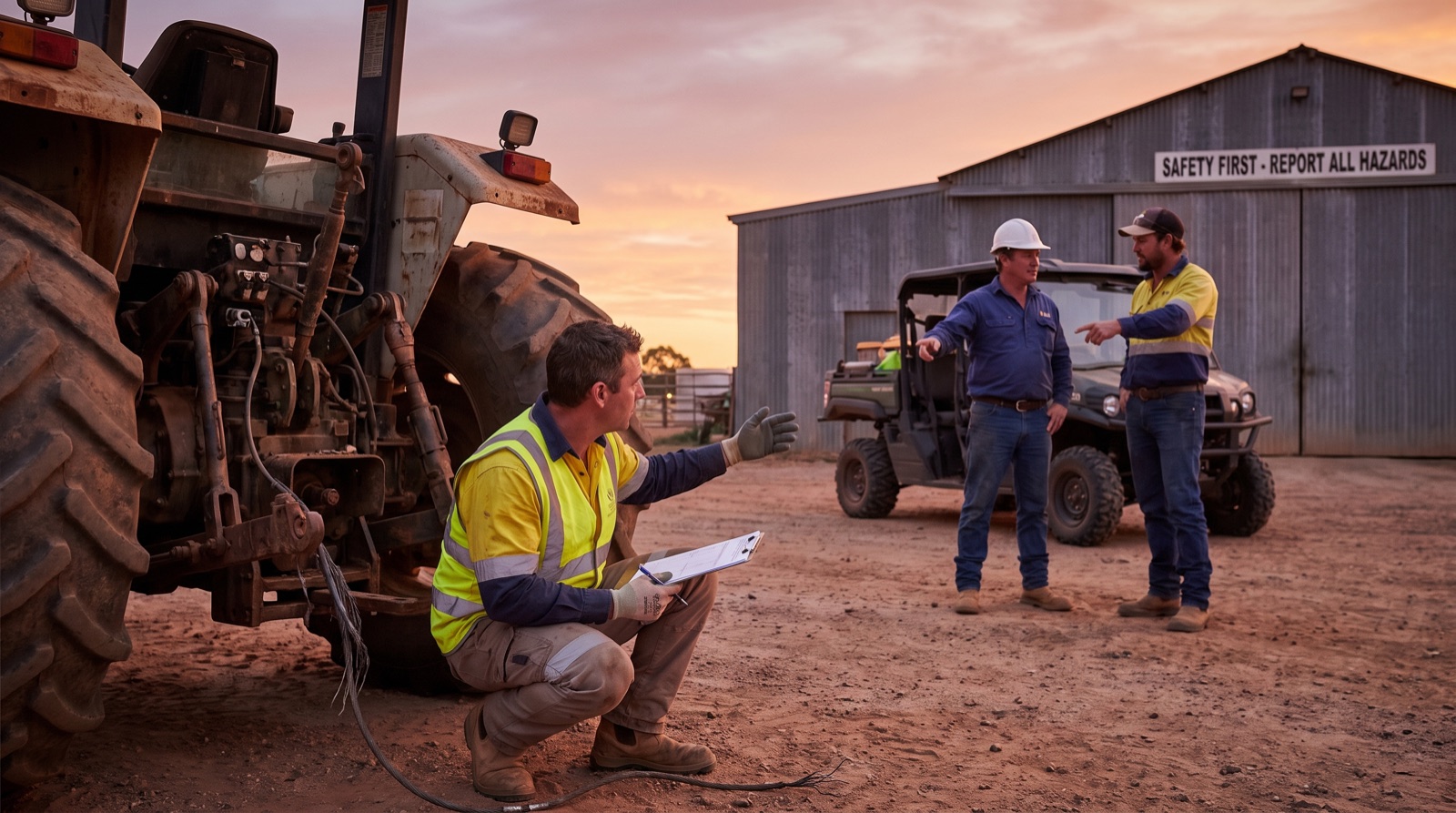
- A machinery workshop,
- Or a boundary fence with poor terrain.
This lack of contextual awareness is a critical flaw.
AirAgri's platform maps each property and overlays zones of activity, risk, and asset proximity. That way, if an alert is triggered—or no check-in is received—rescuers know exactly what hazards are nearby, increasing the chances of an effective and timely response.
2. No Control Over Escalation or Emergency Response
With an adventure EPIRB, you don't control how your alarm is handled.
Once the SOS is triggered, the process is out of your hands:
- The alert goes to AMSAR.
- AMSAR calls your two pre-set contacts.
- If they're unreachable, a national emergency protocol kicks in.
- Emergency services are deployed—without your team knowing or providing updated information.
In contrast, AirAgri enables custom escalation workflows:
- Alerts can go to multiple on-farm or off-farm contacts,
- You can assign regional neighbours, contractors, or managers,
- And you retain control of who gets notified, when, and how.
That level of control saves lives—and avoids false alarms costing time and resources.
3. Check-Ins Are Manual, Not Monitored
While adventure EPIRBs now offer check-in buttons, they rely on manual input from the worker.
That's fine when things are going well. But what if:
- The worker forgets to check in?
- They're injured and unable to reach the device?
- They're unconscious or pinned by machinery?
AirAgri's lone worker system removes this dependency with automated check-ins and fall detection, triggering alerts if there's a lack of movement, late return, or other anomalies—without requiring the worker to press a button.
4. No Farm System Integration
Adventure EPIRBs operate in isolation. There's no integration with:
- Your farm asset records,
- Workforce planning tools,
- Safety logs or chemical registers,
- Or weather and task overlays.
AirAgri connects safety with your property's daily operations, meaning alerts aren't just location points—they're packed with insight into who, what, where, and why.
5. No Teamwide Awareness
When an EPIRB is activated, the only people notified are the two contacts listed. There's no broadcast to your broader team, no live map of where people are working, and no ability to communicate across the farm during an emergency.
AirAgri solves this with live dashboards, property-wide alerts, and team-based tracking, so everyone stays informed—and no one is left wondering what's happening.
Real Example: Why Context Matters
Imagine your farmhand triggers an alert near a large machinery shed. The beacon sends the GPS coordinates to AMSAR, who calls your pre-set contact (maybe it's your mobile—but you're in a plane, out of service). They try the second number—also unanswered.
Emergency services are then deployed—but with no knowledge of the farm, no idea if there's livestock, vehicles, dogs, or gates, and no insight into what the worker was doing.
That's wasted time.
Compare that with AirAgri's solution: the worker is automatically checked in throughout the day. Their movement stops for 15 minutes near the spray shed—an active zone. The system knows this isn't normal and sends an alert to your local team. Someone responds in under 10 minutes, avoiding escalation entirely.
Why Farm Safety Needs More Than an SOS Button
Farming is dangerous. In Australia, agriculture is still among the leading industries for workplace injuries and fatalities, especially for those working alone.
Adventure EPIRBs weren't built for:
- Long days of repetitive risk,
- Managing multiple workers on a single property,
- Overlays of weather, tasks, and machinery,
- Or enabling proactive alerts when something seems off.
They're backup tools—not systems.
A modern lone worker safety solution for agriculture needs to:
- Know the farm layout
- Understand activity zones and risks
- Integrate check-ins, movement tracking, and fall detection
- Provide multi-level, customisable alert paths
- Support real-time team visibility
- Empower farm operators, not just emergency services
That's why AirAgri exists—to protect your people before something goes wrong, and to respond faster and smarter if it does.
Don't Leave Safety to Chance
Adventure EPIRBs are great tools—for adventurers. But if you're running a business, managing a property, and working every day with machinery, animals, and unpredictable weather, you need something purpose-built for your world.
Farm safety is not about responding once something goes wrong. It's about knowing where people are, what they're doing, and how to get to them fast—with the right context and information.
At AirAgri, we go beyond the SOS button. Our platform gives you:
- Peace of mind with continuous monitoring,
- Faster response times with contextual alerts,
- And a way to keep your workers safe, connected, and accounted for.
If you're using an adventure EPIRB right now, you're part of the way there. But don't stop halfway. Let's talk about how you can take the next step in protecting your people and your future.